NAD⁺ (Nicotinamide Adenine Dinucleotide)
Molecular Formula: C21H27N7O14P2
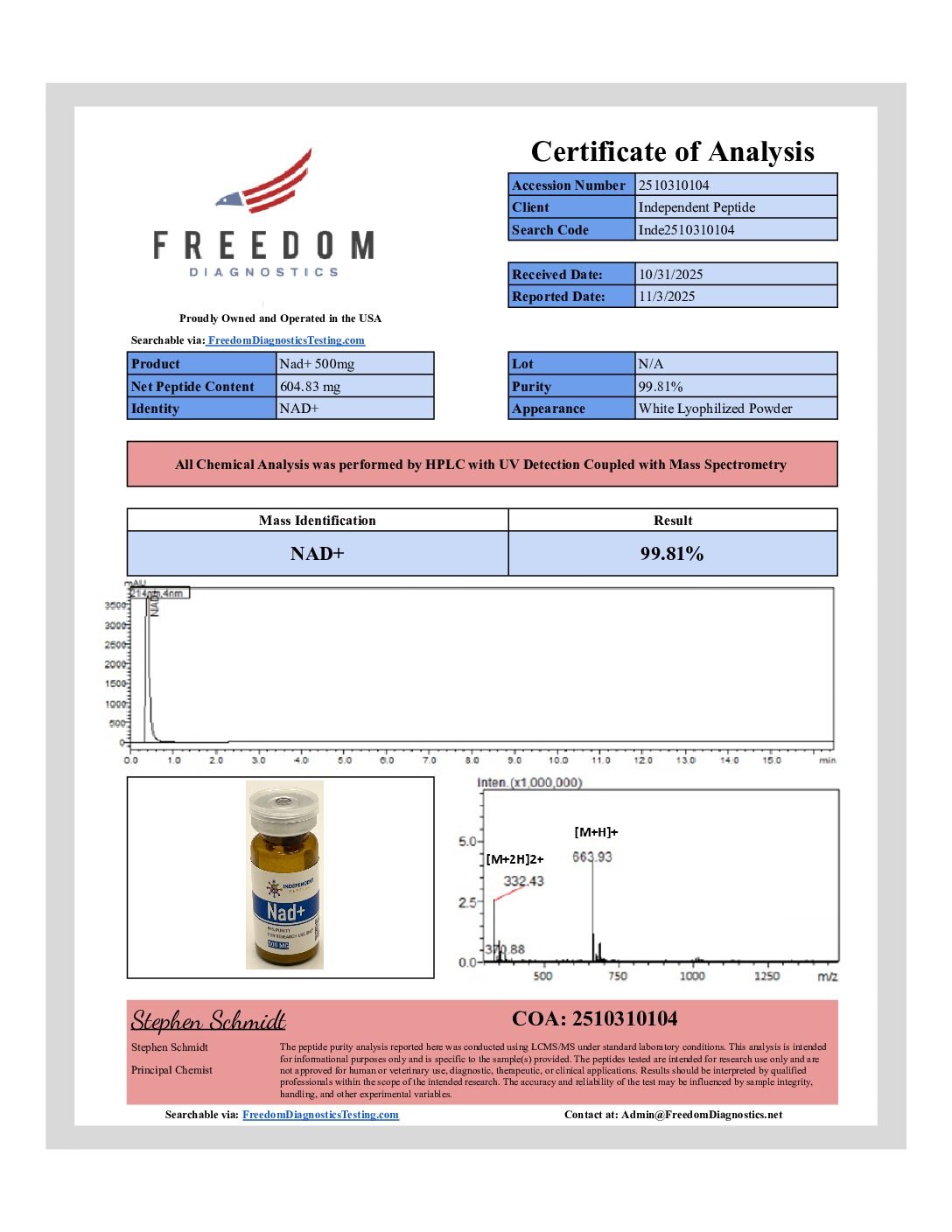
Molecular Weight: ~663.4 g/mol
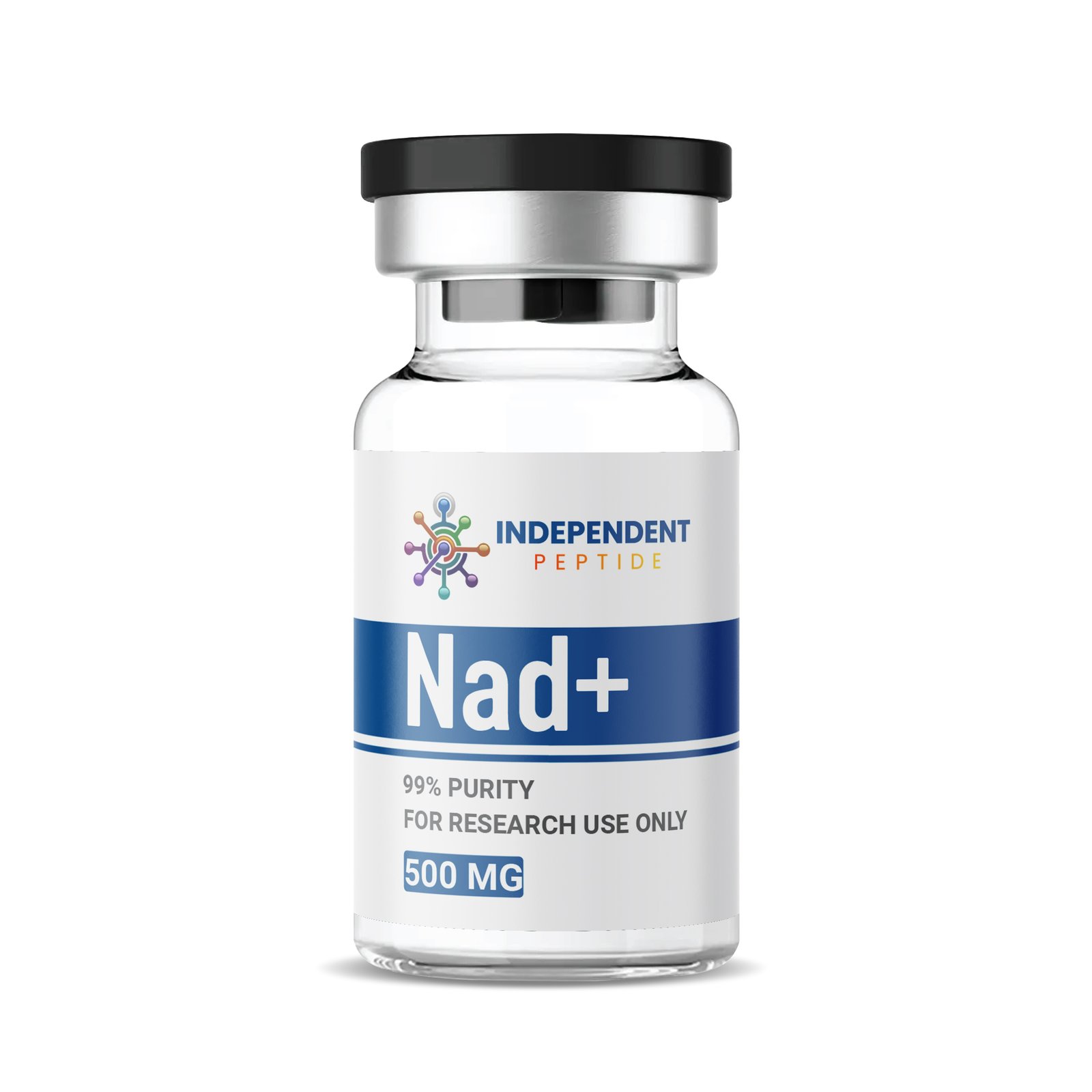
Form: Lyophilized powder or stabilized solution, ≥98% purity
Synonyms: β-Nicotinamide adenine dinucleotide, Coenzyme NAD⁺
Overview
NAD⁺ is a vital coenzyme found in every living cell, playing a central role in cellular energy production, mitochondrial health, and DNA repair. As a cofactor in redox reactions, NAD⁺ is essential for converting nutrients into ATP, the body’s primary energy currency.
In research, NAD⁺ has gained significant attention for its potential role in aging, metabolic regulation, neuroprotection, and cellular resilience. Declining levels of NAD⁺ with age have positioned it as a critical target in studies exploring longevity and regenerative medicine.
Mechanism of Action
In laboratory models, NAD⁺ supports cellular health through multiple mechanisms:
Energy Metabolism: Functions as a coenzyme in glycolysis, the TCA cycle, and oxidative phosphorylation.
Sirtuin Activation: Stimulates sirtuin proteins (SIRT1–7), regulating gene expression linked to stress resistance and longevity.
DNA Repair: Serves as a substrate for PARPs (poly ADP-ribose polymerases), facilitating genomic stability.
Mitochondrial Function: Supports biogenesis and efficiency of mitochondria.
Cellular Stress Response: Enhances resilience against oxidative and metabolic stress.
Research Areas
NAD⁺ is being studied in preclinical and experimental research for:
Aging & Longevity: Investigating its decline with age and supplementation strategies to restore youthful function.
Neuroprotection: Research into protection against neurodegenerative stress in brain models.
Metabolic Health: Studying glucose regulation, insulin sensitivity, and energy balance.
Mitochondrial Disorders: Exploring its role in energy metabolism and mitochondrial repair.
DNA Damage & Repair: Evaluating enhanced genomic stability in stressed cells.
Handling & Storage
Storage (lyophilized): –20°C in a cool, dry environment away from light.
Reconstitution: Reconstitute with sterile water or buffer as required. Store solution at 2–8°C.
Stability: Minimize freeze–thaw cycles for maximum stability.
Disclaimer
NAD⁺ is provided strictly for laboratory and preclinical research use only.
It is not approved for human or veterinary use, therapeutic treatment, or diagnostic applications. No clinical evidence supports its safety or efficacy in humans outside controlled research settings.