
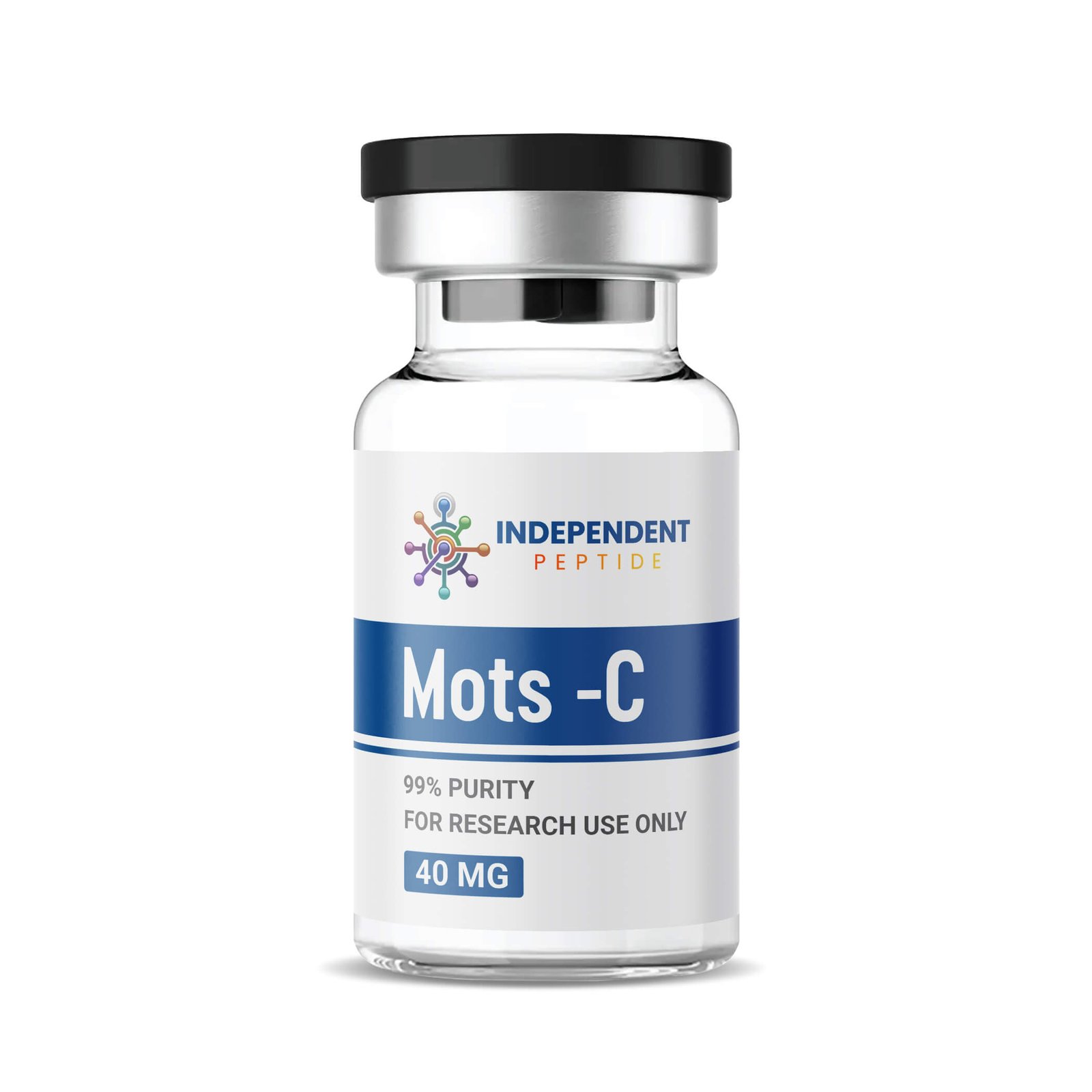
MOTS-c (Mitochondrial-Derived Peptide)
Molecular Formula: C57H81N17O21S2
Molecular Weight: ~1479 g/mol
Sequence: Met-Arg-Trp-Gln-Glu-Met-Gly-Tyr-Ile-Phe-Tyr-Pro-Arg-Lys-Leu-Arg
Form: Lyophilized powder, ≥98% purity
Synonyms: Mitochondrial ORF of the 12S rRNA type-c, Mitochondrial-Derived Regulatory Peptide
Overview
MOTS-c is a mitochondrial-derived peptide (MDP) encoded by the mitochondrial 12S rRNA gene. Discovered in 2015, it has since been widely studied for its metabolic regulatory functions, cellular stress adaptation, and potential anti-aging properties.
Unlike many peptides sourced from proteins in the nucleus, MOTS-c is unique in that it originates directly from mitochondrial DNA, highlighting its evolutionary role in cellular energy regulation and resilience. Preclinical studies suggest its importance in glucose metabolism, fat utilization, and protection against metabolic stress.
Mechanism of Action
In research settings, MOTS-c functions as a metabolic regulator that influences both mitochondrial and nuclear signaling pathways.
Key mechanisms include:
AMPK Activation: Stimulates AMP-activated protein kinase, promoting glucose uptake and fatty acid oxidation.
Insulin Sensitivity: Improves cellular responsiveness to insulin in experimental models.
Stress Response: Enhances cell survival under metabolic or oxidative stress conditions.
Exercise-Mimetic Effect: Mimics some physiological effects of endurance exercise by increasing energy expenditure.
Gene Expression Regulation: Influences nuclear genes linked to metabolism and stress adaptation.
Research Areas
MOTS-c is studied in preclinical research for:
Metabolic Health: Exploring its role in glucose regulation, obesity, and insulin resistance.
Aging & Longevity: Investigating potential anti-aging effects and mitochondrial protection.
Exercise Physiology: Researching endurance and energy metabolism enhancement.
Neuroprotection: Studying possible protective effects against oxidative and metabolic stress in brain tissue.
Cardiovascular Support: Examining roles in vascular health and adaptation to ischemia.
Handling & Storage
Storage (lyophilized): –20°C, dry and protected from light.
Reconstitution: Reconstitute with sterile or bacteriostatic water. Store solution at 2–8°C.
Stability: Avoid multiple freeze–thaw cycles.
Disclaimer
MOTS-c is offered strictly for laboratory and preclinical research use only.
It is not approved for human or veterinary consumption, therapeutic treatment, or diagnostic purposes. No clinical data confirms its safety or efficacy in humans.