
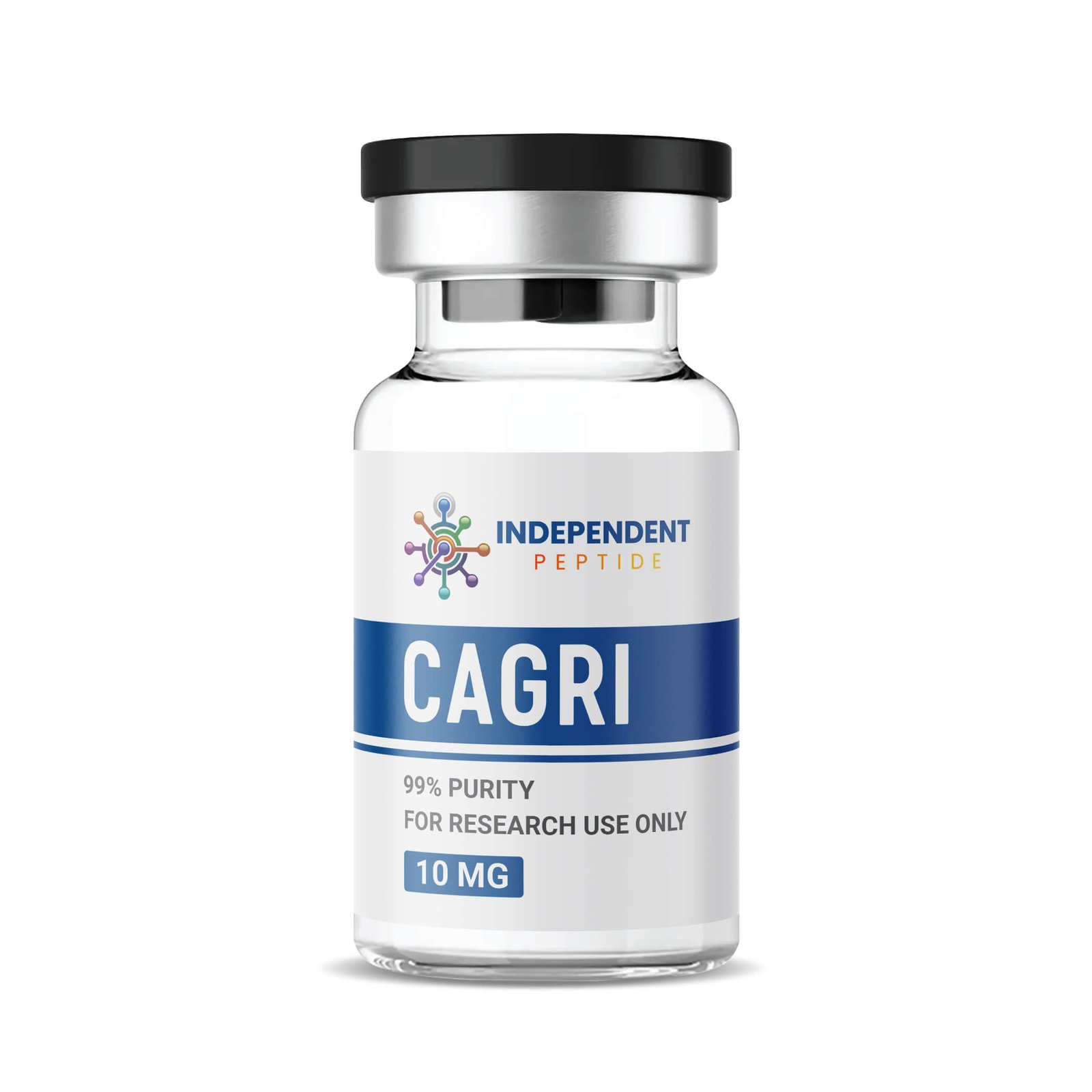
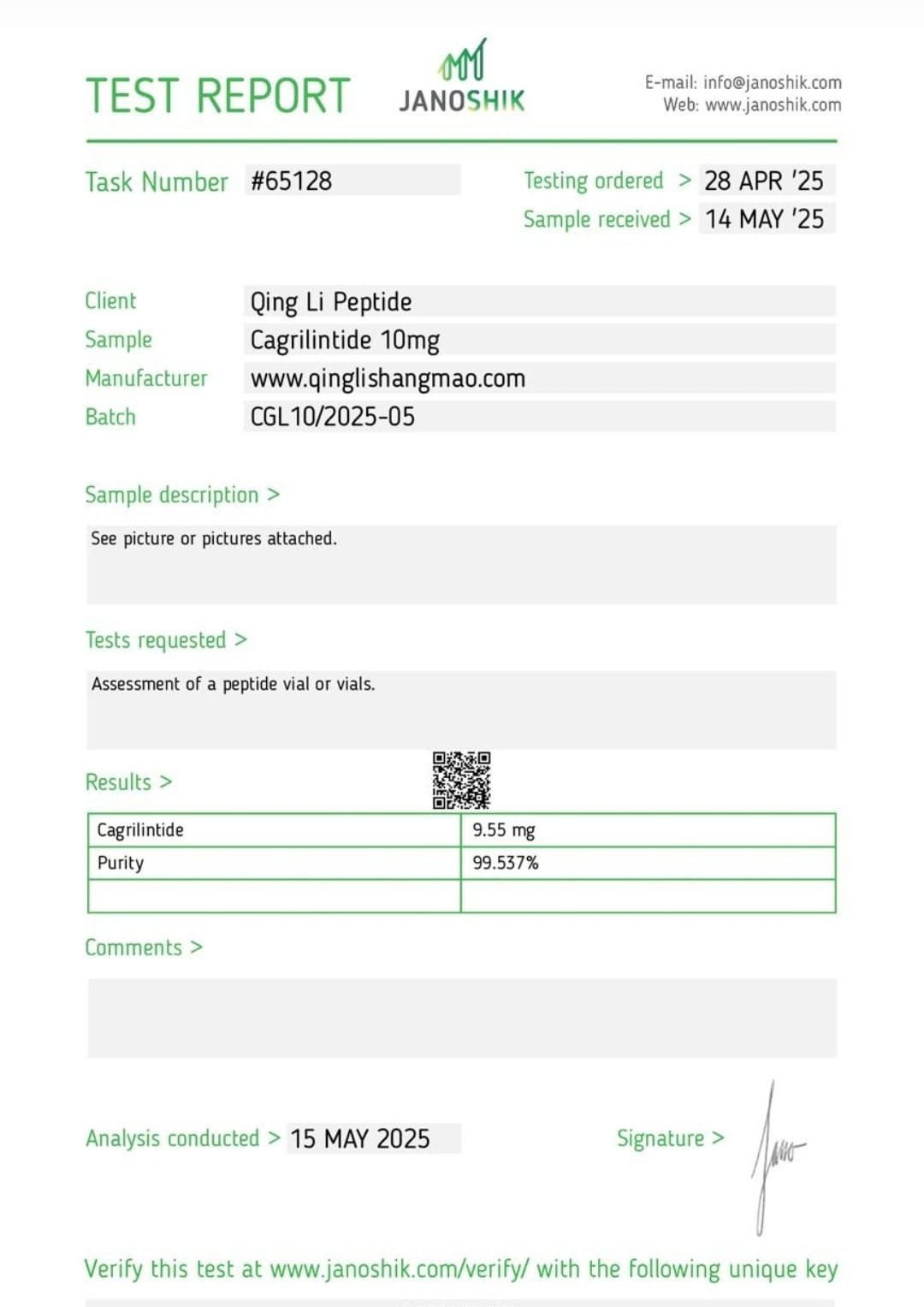
Cagrilintide (Cagri)
Molecular Formula: C190H291N51O57
Molecular Weight: ~4020 g/mol
Structure: Long-acting amylin analog
Form: Lyophilized peptide, ≥98% purity
Synonyms: AMG-986, Long-acting amylin receptor agonist
Overview
Cagrilintide (often referred to as Cagri) is a synthetic, long-acting amylin analog designed to target amylin and calcitonin receptors involved in appetite and weight regulation. Amylin is a naturally occurring peptide hormone co-secreted with insulin that plays a critical role in satiety signaling, gastric emptying, and glucose control.
Due to its enhanced stability and half-life, Cagrilintide has become an important subject in obesity and metabolic research, especially when studied in combination with GLP-1 receptor agonists such as Semaglutide.
Mechanism of Action
In preclinical research, Cagrilintide demonstrates its effects through:
Amylin Receptor Agonism: Activates amylin and calcitonin receptors to regulate appetite and satiety.
Gastric Emptying Delay: Slows gastric emptying, reducing post-meal glucose spikes.
Central Nervous System Modulation: Influences hypothalamic pathways to reduce food intake.
Synergistic Metabolic Effects: Shows enhanced weight-regulating potential when paired with incretin mimetics (e.g., Semaglutide, Tirzepatide).
Extended Half-Life: Structural modifications improve stability, supporting once-weekly dosing in experimental settings.
Research Areas
Cagrilintide is currently being investigated in preclinical and translational studies for:
Obesity & Weight Loss Models: Evaluating reductions in food intake and body weight.
Type 2 Diabetes Research: Studying synergistic effects on glucose and appetite regulation.
Cardiometabolic Health: Exploring roles in cholesterol, triglyceride, and lipid metabolism.
Combination Therapies: Researching dual administration with GLP-1 analogs for enhanced outcomes.
Neuroendocrine Studies: Understanding amylin’s role in central appetite regulation pathways.
Handling & Storage
Storage (lyophilized): –20°C, protected from light and moisture.
Reconstitution: Reconstitute with sterile water or suitable buffer.
Stability: Store reconstituted peptide at 2–8°C and avoid repeated freeze–thaw cycles.
Disclaimer
Cagrilintide is intended exclusively for laboratory and preclinical research purposes.
It is not approved for human or veterinary use and must not be used in diagnostic, therapeutic, or self-administration contexts. All research use should remain within controlled laboratory environments.