
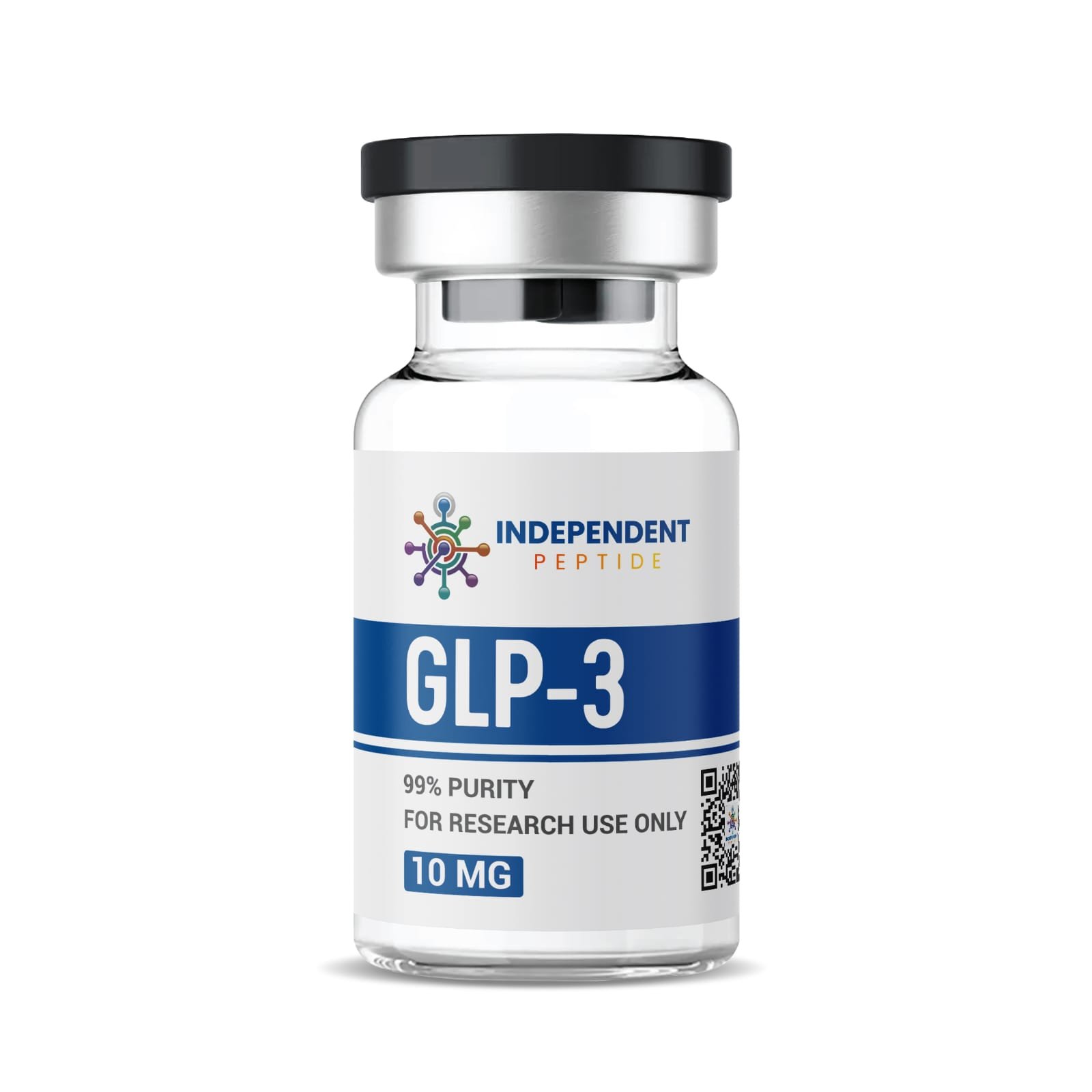
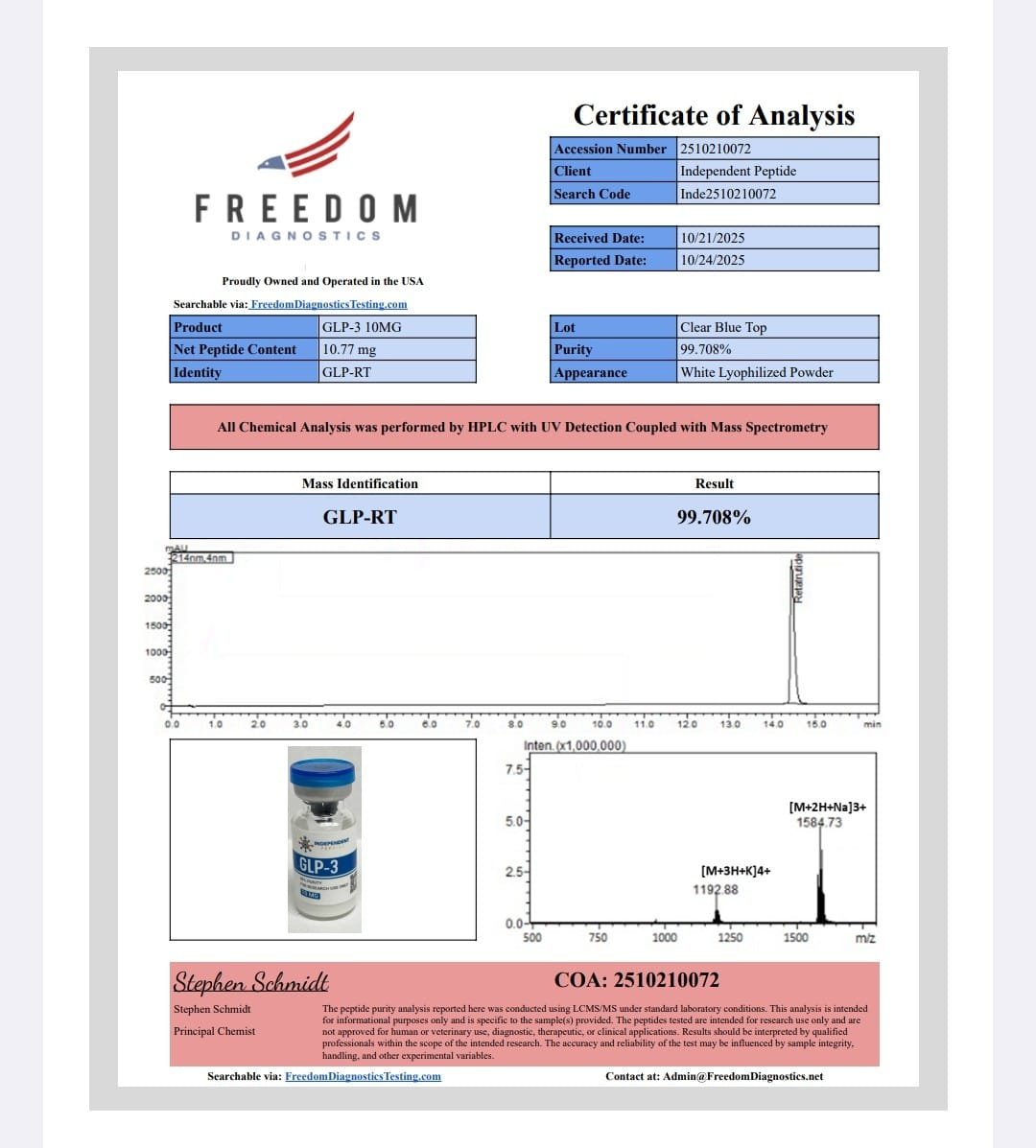
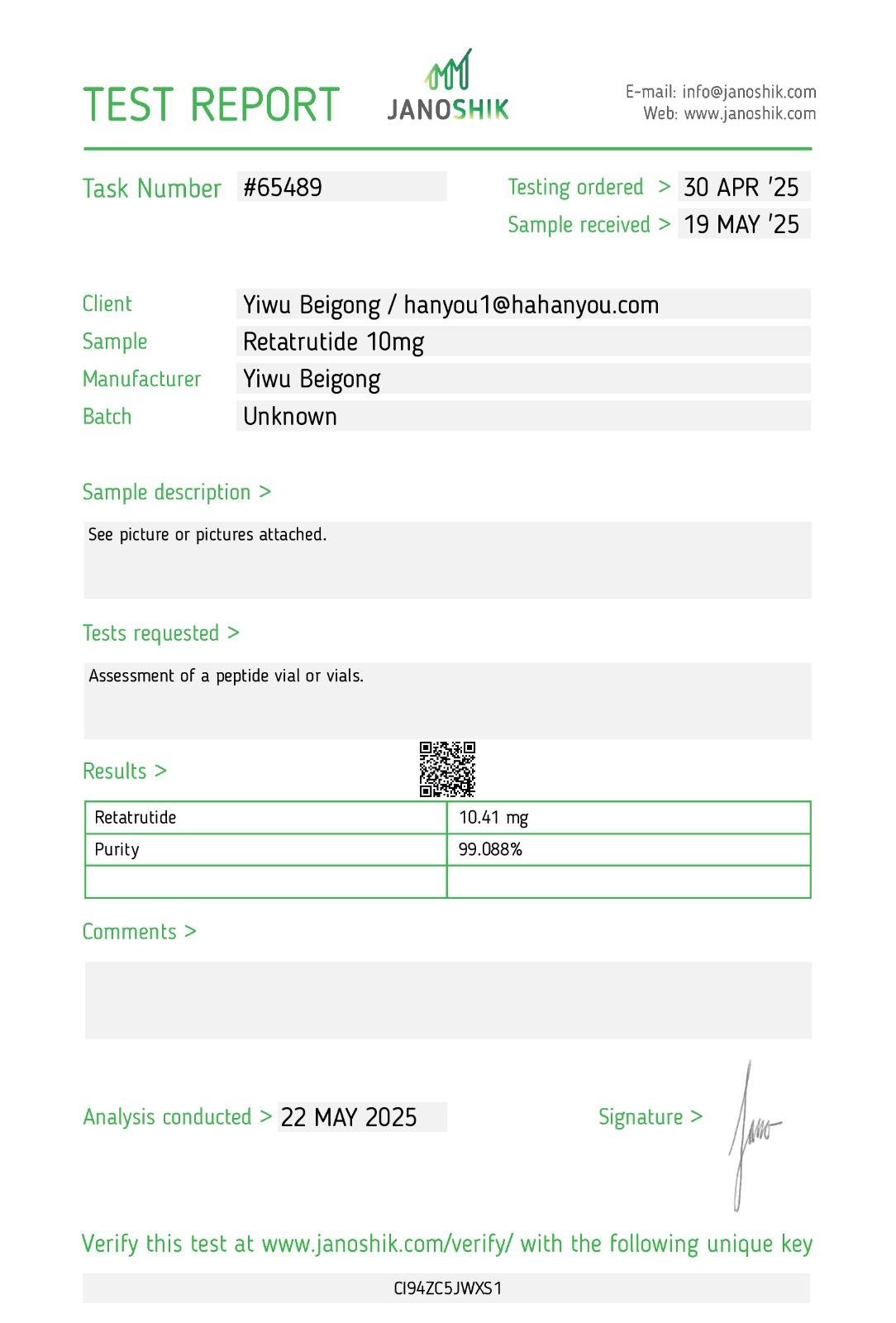
GLP 3
Molecular Formula: C267H401N65O81
Molecular Weight: ~5963 g/mol
Structure: Triple agonist peptide (GLP-1, GIP, and glucagon receptors) with fatty acid modification for extended half-life
Form: Lyophilized peptide, ≥98% purity
Synonyms: LY3437943, Triple Incretin Agonist
Overview
GLP 3 is an investigational triple incretin peptide that simultaneously activates GLP-1 (glucagon-like peptide-1), GIP (glucose-dependent insulinotropic polypeptide), and glucagon receptors. This unique combination is designed to harness the complementary metabolic pathways of all three targets, giving it the potential to become one of the most powerful agents in weight management, glucose regulation, and metabolic research.
With structural modifications that extend its half-life, GLP 3 provides sustained receptor activation and is considered a next-generation advancement beyond dual agonists like Tirzepatide.
Mechanism of Action
In preclinical research, Retatrutide has been shown to:
GLP-1 Receptor Agonism: Stimulates insulin release and suppresses glucagon in a glucose-dependent manner.
GIP Receptor Agonism: Enhances insulin sensitivity and synergizes with GLP-1 activity.
Glucagon Receptor Agonism: Increases energy expenditure and supports fat metabolism.
Appetite Regulation: Modulates hypothalamic pathways to reduce caloric intake.
Extended Half-Life: Fatty acid modifications enable albumin binding, prolonging circulation and stability.
Research Areas
Retatrutide is currently being investigated in preclinical and translational studies for:
Obesity Research: Evaluating its role in appetite suppression, fat loss, and energy balance.
Type 2 Diabetes Models: Exploring improvements in insulin sensitivity and glycemic control.
Cardiometabolic Health: Studying potential benefits in lipid metabolism, triglyceride reduction, and cardiovascular biomarkers.
Energy Expenditure Studies: Assessing glucagon’s contribution to increased caloric burn.
Advanced Combination Therapies: Comparing its effects to GLP-1 and dual agonist peptides for metabolic optimization.
Handling & Storage
Storage (lyophilized): –20°C, protected from light and moisture.
Reconstitution: Reconstitute with sterile water or suitable buffer.
Stability: Store reconstituted peptide at 2–8°C and avoid multiple freeze–thaw cycles.
Disclaimer
Retatrutide is intended strictly for laboratory and preclinical research use.
It is not approved for human or veterinary use and should not be used in diagnostic, therapeutic, or self-administration contexts. Applications are restricted to controlled scientific research environments only.